National Santri Day, which is commemorated every October 22, is not just a day to commemorate the services of santri in Indonesian history, but also an important reflection of the role of santri in maintaining and fighting for the integrity of the nation from the era of independence to the present.
In the era of physical struggle against the colonizers, santri were at the forefront of the nation’s defense. Now, in the era of independence, they continue the struggle by maintaining and upholding the values of Pancasila which are the foundation of the Indonesian state.
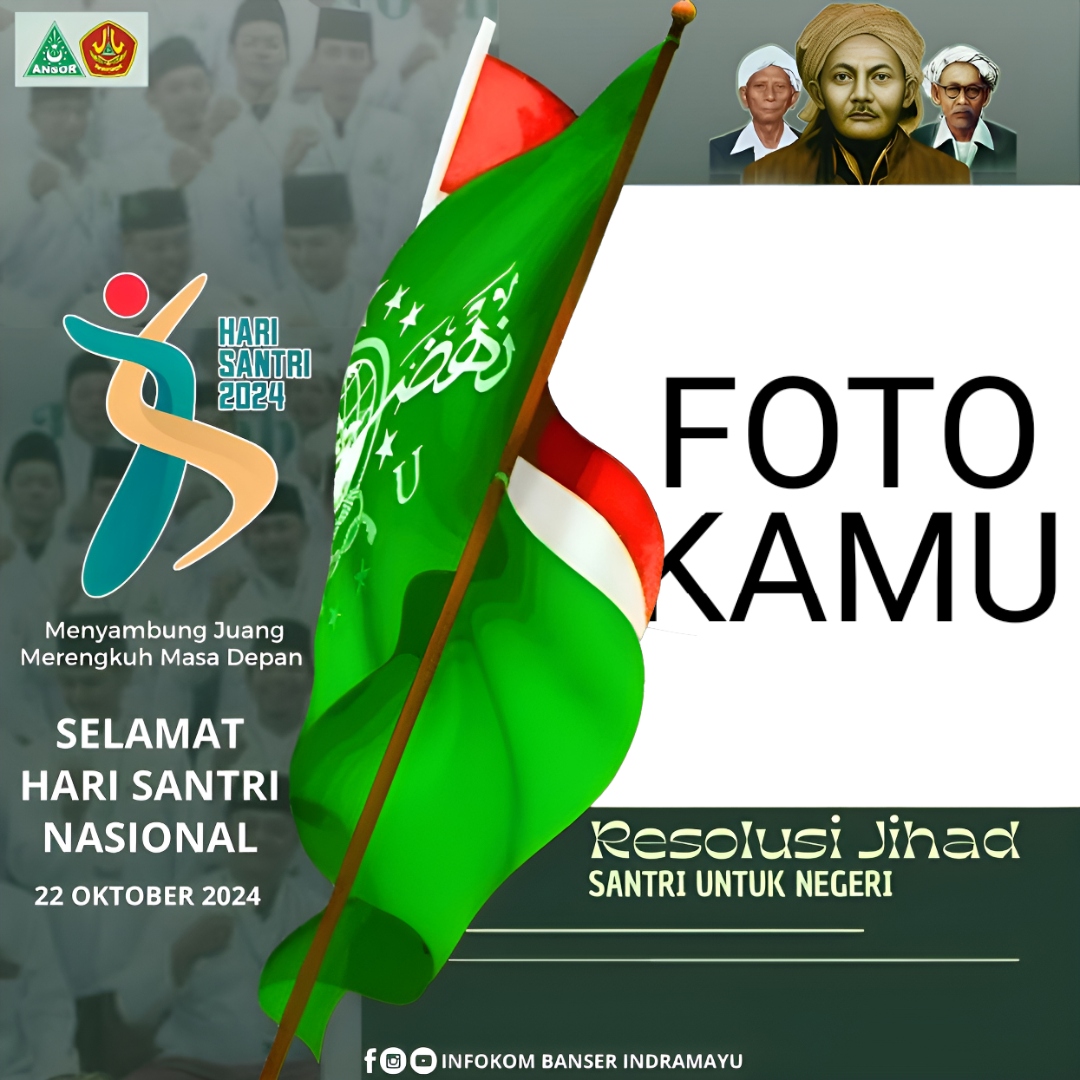
This article will discuss two important aspects of the santri struggle: the physical struggle in the past and the moral struggle in the present. In addition, you can also download the 2024 National Santri Day Twibbon for free here.
The history of Indonesia’s struggle for independence cannot be separated from the great role of santri. Santri not only fought in the religious field, but also played an active role in fighting the colonizers for the sake of national independence.
Jihad Resolution and the Battle of Surabaya
One of the most monumental moments that reflects the role of santri in the struggle for independence is the Jihad Resolution issued by KH. Hasyim Asy’ari on October 22, 1945. After the Proclamation of Independence on August 17, 1945, Indonesia still faced a major threat from the Allied forces, who tried to restore Dutch colonial rule in Indonesia.
In the midst of this critical situation, KH. Hasyim Asy’ari issued the Jihad Resolution which called on Muslims, especially santri, to wage jihad against the colonizers in order to defend Indonesia’s independence. This resolution considered defending independence as a religious obligation for Muslims.
This call received an extraordinary response, especially from the santri and the community in Surabaya. They moved to defend the city from attacks by Allied troops who came with the NICA (Netherlands Indies Civil Administration). This battle was later known as the Battle of Surabaya on November 10, 1945, which is now commemorated as Heroes’ Day. The role of santri on the battlefield is one of the real proofs of how they participated in defending the nation’s independence.
The Role of Islamic Boarding Schools as a Base of Resistance
Islamic boarding schools throughout Indonesia also became a base of resistance against the colonizers. Students who joined various people’s armies, such as Laskar Hizbullah and Laskar Sabilillah, participated in the physical struggle against the Dutch and Allied troops. They not only fought with weapons, but also with the spirit of jihad and high moral struggle.
Islamic boarding schools were not only places to study religion, but also places where students learned war tactics, strengthened the spirit of patriotism, and instilled love for the homeland. The kiai played an important role as spiritual leaders and drivers of resistance. Students and kiai together built a fighting spirit based on faith and love for the nation.
The Struggle of Santri in the Present: Maintaining the Values of Pancasila
After independence was achieved, the struggle of the santri did not stop. In the era of independence, the santri continued to fight, but in a different way. If in the past their struggle focused on physical resistance against the colonizers, now the santri are at the forefront in maintaining and upholding the values of Pancasila, as the basis of the nation’s ideology.
Enforcement of Pancasila Values
Pancasila, as the foundation of the Indonesian state, is the result of a national agreement that summarizes the national, religious, and humanitarian values that are upheld by the Indonesian people. The values of Pancasila are very much in line with the teachings of Islam, which are taught in Islamic boarding schools to students. Therefore, students have an important role in internalizing and disseminating the values of Pancasila in society.
1. Belief in the One Almighty God: Students are a representation of a group of people who uphold faith and devotion to God. With strong religious teachings in Islamic boarding schools, students help strengthen society’s understanding of the importance of a harmonious, tolerant religious life and mutual respect for differences.
2. Just and Civilized Humanity: Islamic teachings in Islamic boarding schools always emphasize the importance of treating fellow human beings fairly and civilized. Students participate in various social activities aimed at fighting for human rights, including helping those in need through humanitarian activities, social services, and community empowerment.
3. Unity of Indonesia: Students play a role in maintaining national unity through the teachings of Hubbul Wathan Minal Iman (Love of the Homeland is Part of Faith). They are actively involved in preventing social conflicts and spreading the spirit of unity in various regions. Students also become ambassadors of tolerance between religious communities and enforcers of harmony in society.
4. Democracy Led by the Wisdom of Deliberation/Representation: The culture of deliberation is very strong in the pesantren environment. Students are trained to be accustomed to healthy and democratic discussions in decision-making. They apply this principle in social and political life, supporting a dignified and just democracy.
5. Social Justice for All Indonesian People: Pesantren, through equitable education and community empowerment activities, contribute to realizing social justice. Students are also widely involved in social movements aimed at eradicating poverty and social inequality in Indonesia.
The Role of Students in Countering Radicalism and Extremism
One of the biggest challenges facing Indonesia today is the emergence of radicalism and extremism that can threaten national unity. In this context, students play an important role as an antidote to radicalism. Moderate and inclusive pesantren education teaches students to understand Islam as a religion that is rahmatan lil ‘alamin (blessing for all nature), which emphasizes love of peace, tolerance, and dialogue.
Through various preaching and counseling activities, students actively spread moderate religious understanding in society. They also become agents in fighting extreme narratives that have the potential to divide national unity. In maintaining the integrity of the Republic of Indonesia, students continue to echo the values of Pancasila as the ideological foundation that unites all Indonesian people regardless of differences in ethnicity, religion, and race.
Download Twibbon Santri Day for Good Energy
In this digital era, students are also required to master technology and become pioneers in the dissemination of positive information. Through digital platforms, students can fight for the values of Pancasila and spread messages of peace and togetherness to the younger generation of Indonesia.
Students play a role in countering hoaxes, hate speech, and information that can damage national unity. Hopefully this year’s National Santri Day can have a positive impact on Indonesian civilization and the world. Here is the 2024 Santri Day Twibbon which can be downloaded for free: